JigJam: Master’s Capstone Design
Presented Summer 2025, for Learning Design and Technology Seminar (Dr. Karin Forssell, LDT Program Director)
Goal
Design and prototype an edtech tool that addresses a learning challenge. I chose to address the challenge of helping middle school students engage with engineering practices in a way that’s relevant to them.
This work supported by the Stanford Accelerator for Learning.
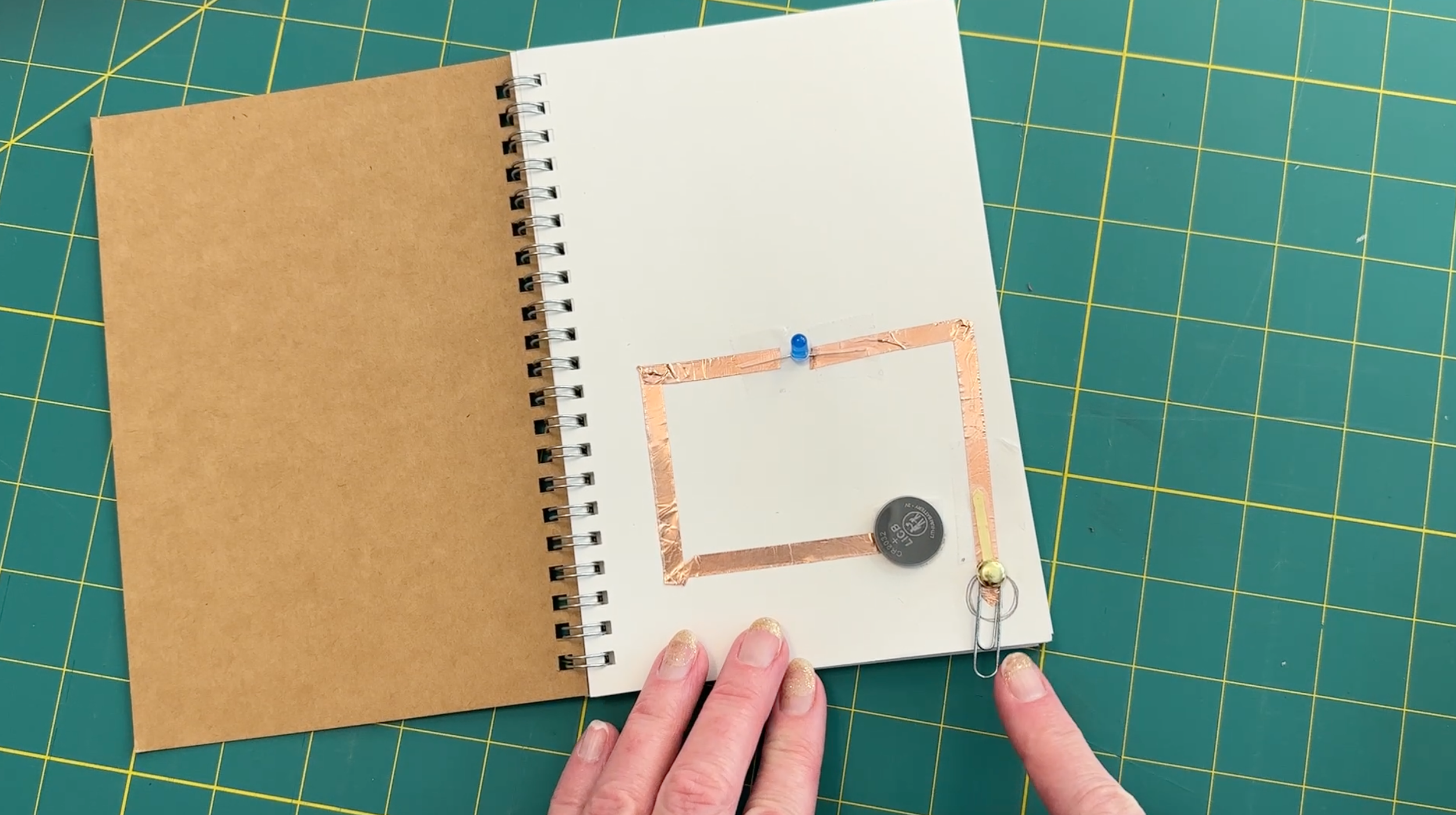
Students were presented with a paper circuits design challenge.
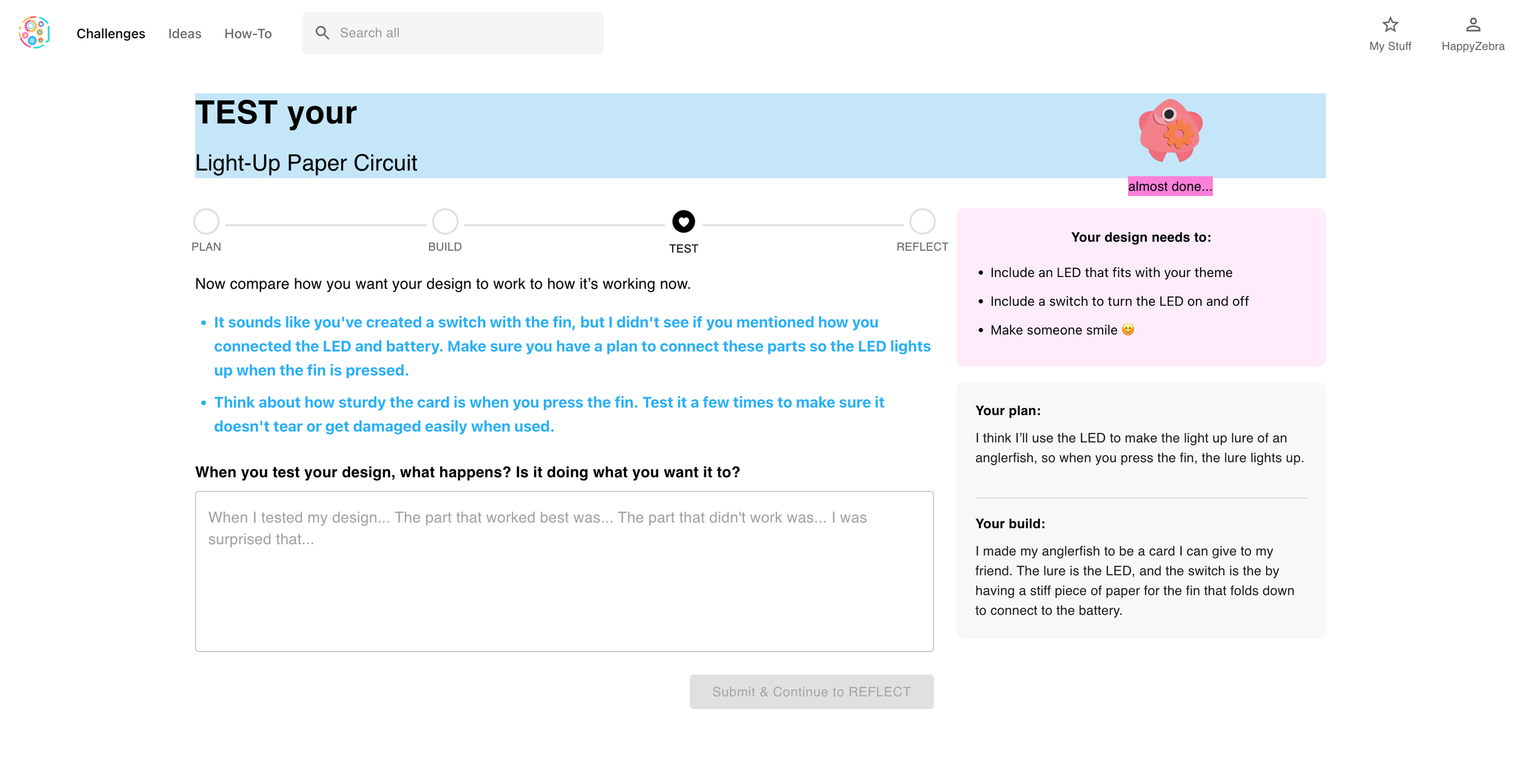
The JigJam system guided students through the engineering design process.
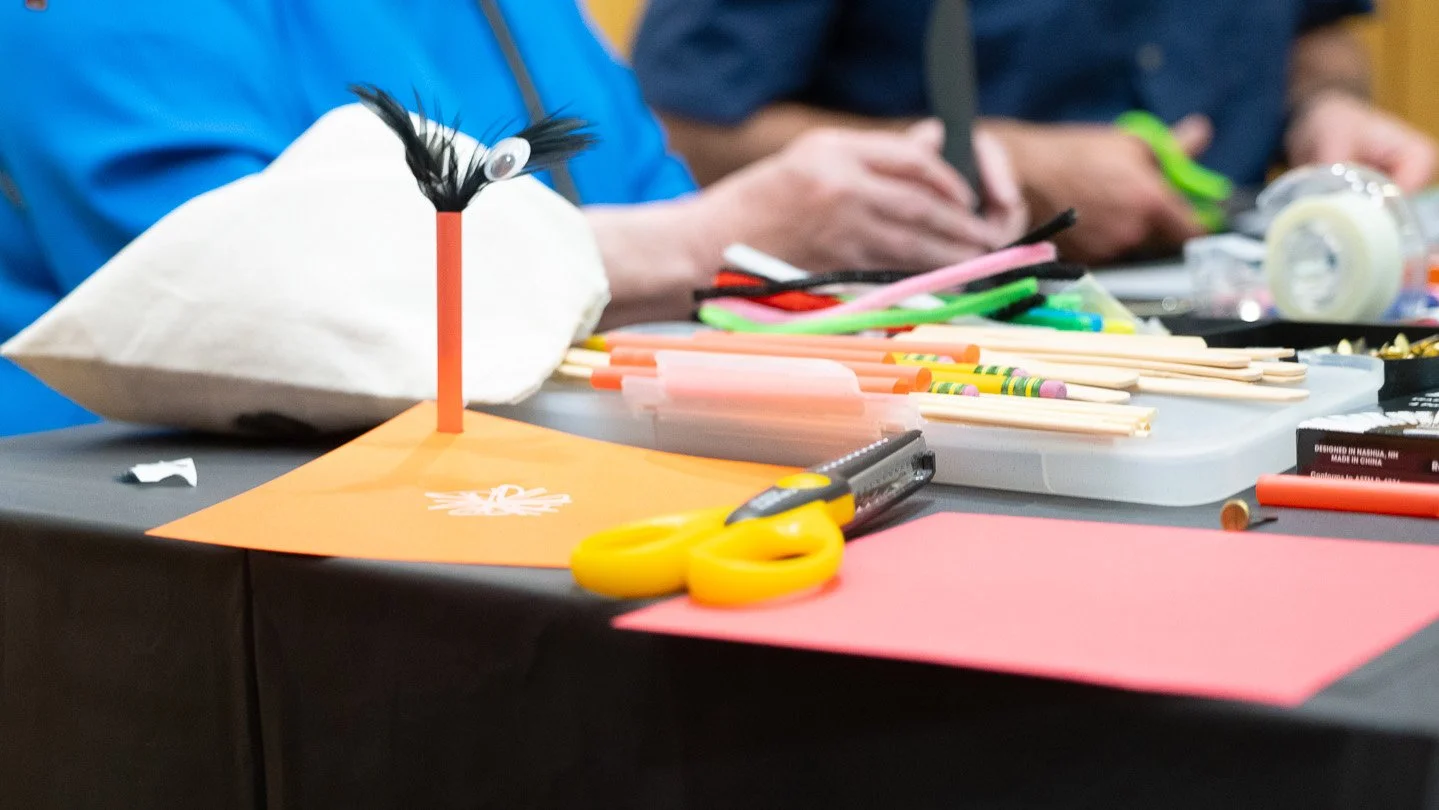
At the LDT Expo, I invited visitors to try another engineering challenge guided by JigJam.
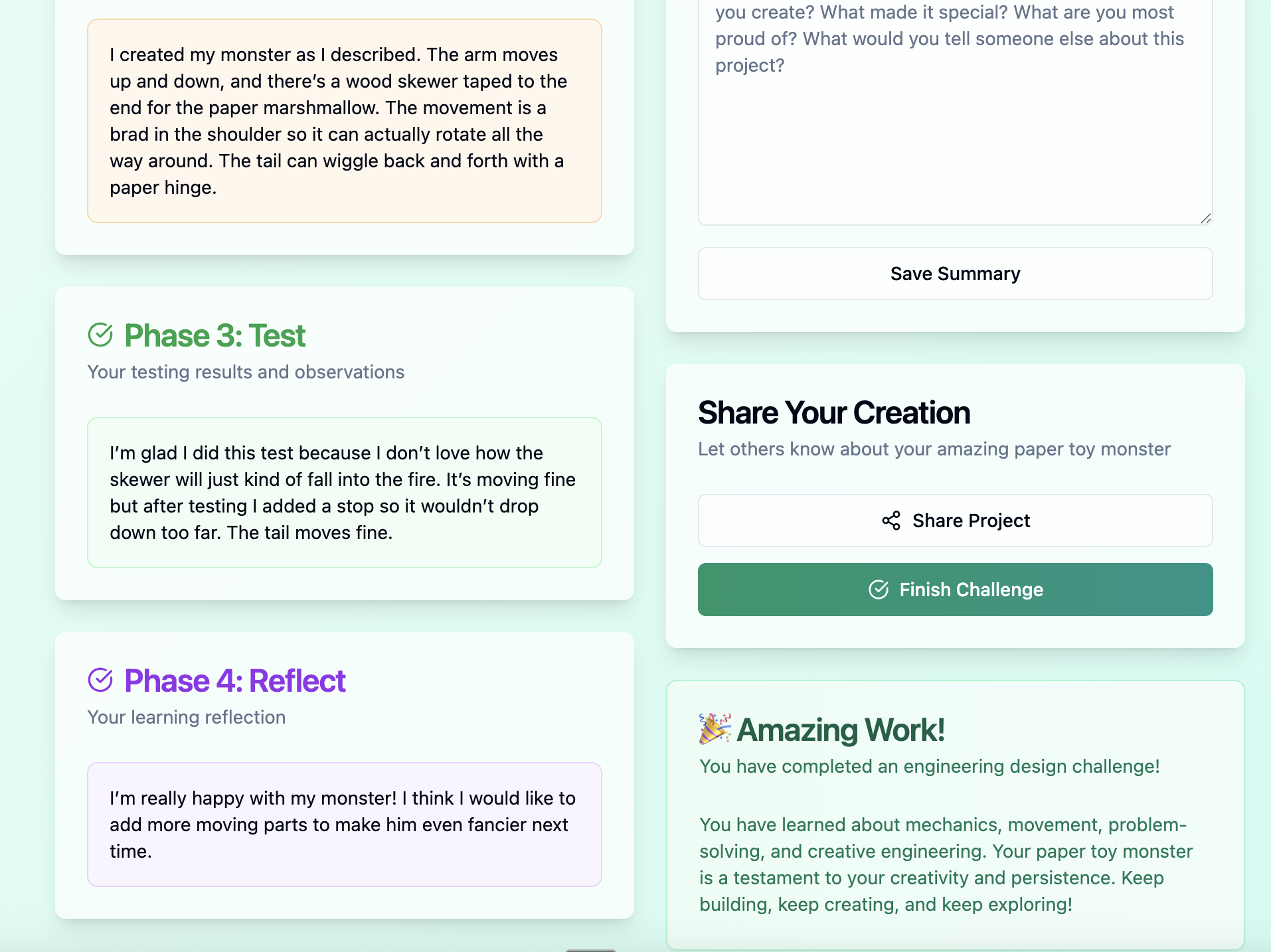
Expo visitors used JigJam to enter their reflections and receive feedback.
Presentation of capstone design & learner trial.
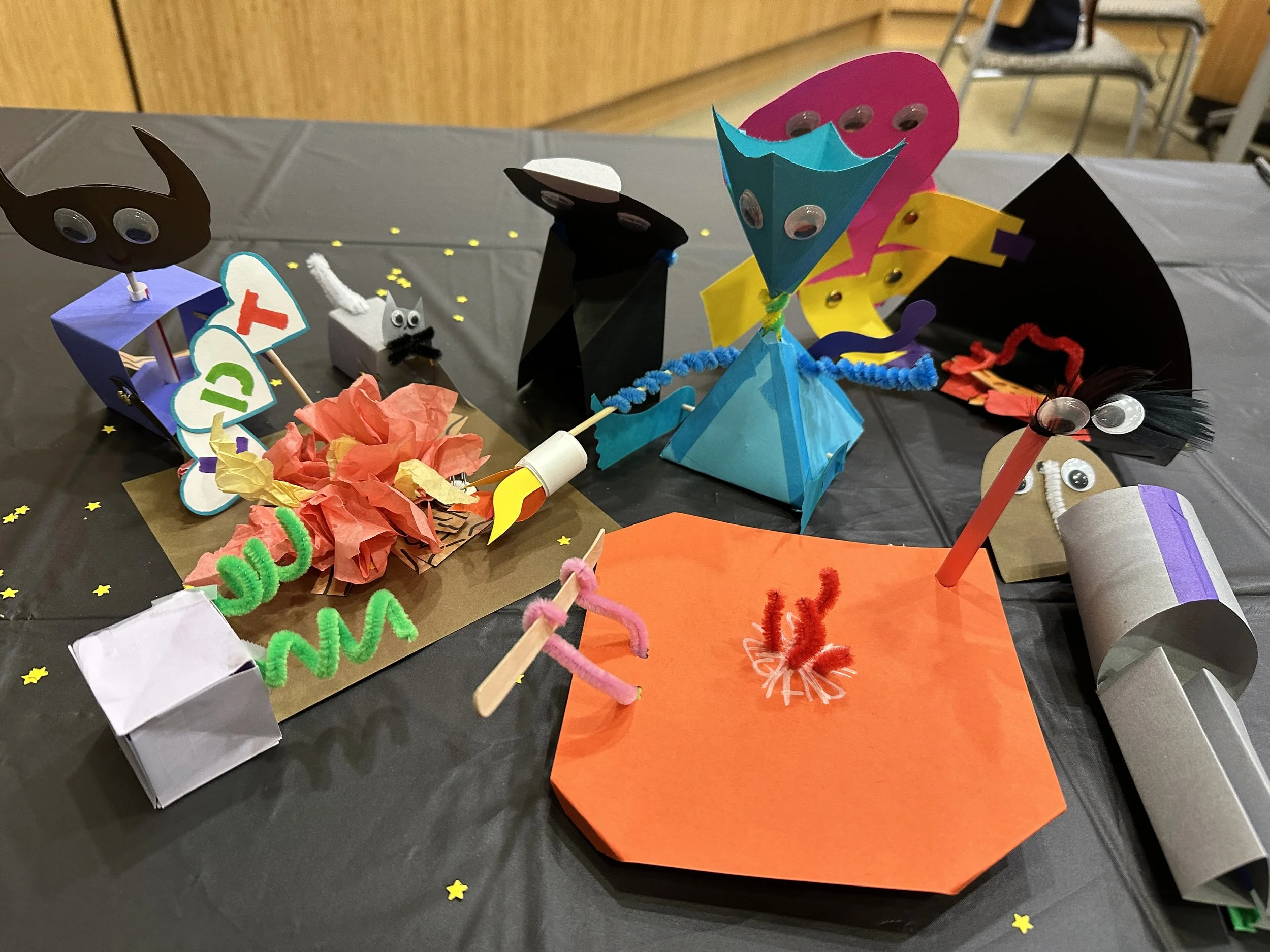
Expo participants ranging in age from 7 to 70 contributed their designs to create a group display.
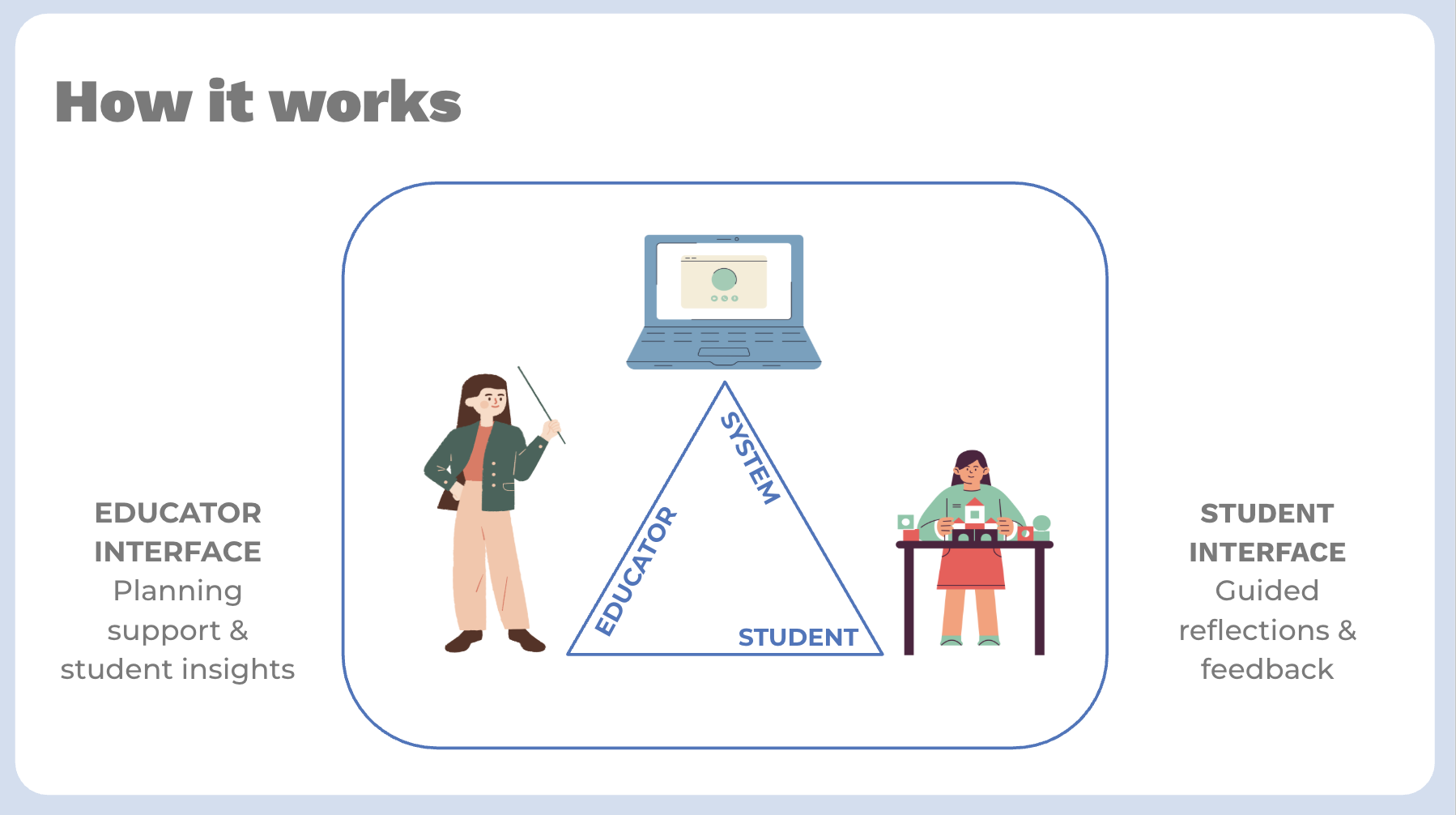
How it works, with educator and student interfaces.
Process
Who needs to learn what, and why? This question was the starting point for the year-long design process that’s at the heart of the LDT program. Working as a solo designer, I researched my learning challenge, designed and prototyped a proposed solution, and completed a design trial with students.
In my research and prototyping, I partnered with K–12 teachers, makerspace educators, and homeschool parents to better understand their perspectives on this problem space. These partners provided input on solution prototypes and pilot results to help refine my prototypes and guide a design trial with students.
Solution
My learning tool, JigJam, engages students in creative, playful engineering design challenges that are easy and inexpensive for non-expert educators to implement.
JigJam is designed to guide students through the engineering design process using written reflections on their work. These reflections are used to generate timely feedback to support problem-solving skills and autonomy.
Kids learn the importance of testing and iteration, and create something meaningful. JigJam helps kids to see themselves as engineers — now and in the future.
Skills
learning experience design
designing with community partners
paper / low-res prototyping
applying pedagogy to design AI interactions (OpenAI)
prototyping with AI coding tools (Lovable, Cursor, Replit)
Outcome
In my design trial, students showed meaning-making in their designs, and most reported an increased interest in and understanding of engineering after the intervention.
My project proposal was awarded a Joyful Learning seed grant from the Stanford Accelerator for Learning (SAL).
I was also selected to present my design during a poster session at the 2025 AI+Education Summit, hosted by the Stanford Institute for Human-Centered Artificial Intelligence (HAI) and SAL.
Results from this trial were shared as a showcase presentation at the Connected Learning Summit, Virtual and Berkeley, CA, Oct 5–6, 2025.
Artifacts
JIGJAM: Creating Interest in STEM Through Creative Problem-Solving (Slide Deck)
Connected Learning Summit — Poster, October 2025
JigJam: Project Video — for LDT Expo 2025, August 2025